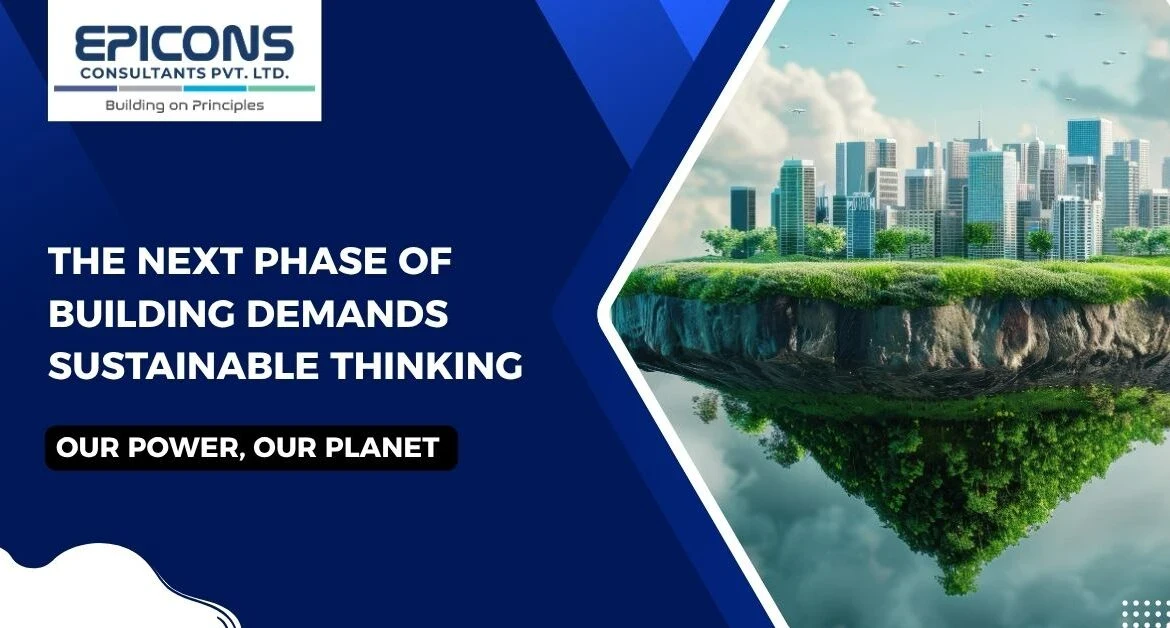
Earth Day 2026, observed on 22 April under the theme Our Power, Our Planet, placed renewed focus on sectors with measurable environmental impact. Construction and infrastructure remain among the largest contributors, given their dependence on energy-intensive materials and continuous expansion across urban and industrial regions.
Data across global studies continue to indicate that cement and steel account for a major share of industrial carbon emissions. Every construction cycle begins with land preparation, followed by extensive material consumption across concrete, steel and allied systems. The scale of activity places civil and structural engineering at the centre of the climate discussion.
Industry response is increasingly moving toward material efficiency. Structural design is being refined to reduce consumption per square foot while maintaining safety margins. Load optimisation, improved detailing and controlled material use are emerging as standard practice in several projects. The use of eco-friendly materials like fly ash and GGBS as partial cement replacements is gaining wider acceptance as companies seek to reduce embodied carbon without altering construction methodology.
Execution at the site level remains a critical factor. Rework, poor storage and material wastage continue to add avoidable environmental cost. Contractors and engineers are placing greater focus on first-time-right execution, controlled handling of cement and steel, and segregation of construction waste. Reuse of concrete debris for sub-base applications and routing of recyclable materials through authorised channels are being adopted across organised projects.
Durability is gaining increased attention as a critical factor in sustainable construction. Structures built with longer service life reduce the need for repeated repairs and reconstruction, lowering overall resource consumption over time. Consistent quality practices such as proper compaction, adequate curing and correct reinforcement placement directly influence structural longevity and long-term efficiency.
Epicons Consultants Pvt. Ltd, with over four decades of experience, has aligned its operations with these priorities. The firm focuses on structural optimisation, rehabilitation of ageing assets and lifecycle extension as core engineering strategies. Retrofitting existing structures in place of demolition remains one of the most effective methods to reduce environmental impact in construction.
Its project approach includes efficient structural systems, use of alternative cementitious materials, reduction of steel and material wastage, and implementation of water and energy management systems such as ETP and STP. Heritage conservation projects further extend structural life while maintaining architectural value.
Project Management Consultants continue to play a decisive role on site. Their oversight of material usage, waste control and execution discipline determines how sustainability measures translate into measurable results during construction.
Earth Day 2026 has brought the construction sector into sharper focus within the climate debate. Infrastructure demand continues to rise, supported by urban growth and industrial expansion. The direction ahead will depend on how effectively engineering practices reduce emissions, optimise resources and improve durability across projects.
Data across global studies continue to indicate that cement and steel account for a major share of industrial carbon emissions. Every construction cycle begins with land preparation, followed by extensive material consumption across concrete, steel and allied systems. The scale of activity places civil and structural engineering at the centre of the climate discussion.
Industry response is increasingly moving toward material efficiency. Structural design is being refined to reduce consumption per square foot while maintaining safety margins. Load optimisation, improved detailing and controlled material use are emerging as standard practice in several projects. The use of eco-friendly materials like fly ash and GGBS as partial cement replacements is gaining wider acceptance as companies seek to reduce embodied carbon without altering construction methodology.
Execution at the site level remains a critical factor. Rework, poor storage and material wastage continue to add avoidable environmental cost. Contractors and engineers are placing greater focus on first-time-right execution, controlled handling of cement and steel, and segregation of construction waste. Reuse of concrete debris for sub-base applications and routing of recyclable materials through authorised channels are being adopted across organised projects.
Durability is gaining increased attention as a critical factor in sustainable construction. Structures built with longer service life reduce the need for repeated repairs and reconstruction, lowering overall resource consumption over time. Consistent quality practices such as proper compaction, adequate curing and correct reinforcement placement directly influence structural longevity and long-term efficiency.
Epicons Consultants Pvt. Ltd, with over four decades of experience, has aligned its operations with these priorities. The firm focuses on structural optimisation, rehabilitation of ageing assets and lifecycle extension as core engineering strategies. Retrofitting existing structures in place of demolition remains one of the most effective methods to reduce environmental impact in construction.
Its project approach includes efficient structural systems, use of alternative cementitious materials, reduction of steel and material wastage, and implementation of water and energy management systems such as ETP and STP. Heritage conservation projects further extend structural life while maintaining architectural value.
Project Management Consultants continue to play a decisive role on site. Their oversight of material usage, waste control and execution discipline determines how sustainability measures translate into measurable results during construction.
Earth Day 2026 has brought the construction sector into sharper focus within the climate debate. Infrastructure demand continues to rise, supported by urban growth and industrial expansion. The direction ahead will depend on how effectively engineering practices reduce emissions, optimise resources and improve durability across projects.
For more details, response@epcions.com